


I spent time with LifePoints: Rewards App as a simple way to turn spare minutes into small rewards, and my overall impression is practical rather than spectacular. This is a free lifestyle app from Kantar Profiles built around answering surveys, then exchanging the resulting balance for PayPal, Venmo, or gift cards. I would not treat it as a replacement for regular income, but it can fit neatly into the moments when I am already waiting, commuting, or taking a short break.
The most important thing to understand is the trade-off. You give the app your opinions and personal time, while the reward depends on which surveys are available to you and whether you qualify for them. That makes the experience less predictable than a traditional cashback app or a fixed-rate task platform. Still, the straightforward purpose is appealing, and the app has attracted a 4.4 average from around 201 thousand ratings, with more than 5 million installs.
How LifePoints feels in everyday use
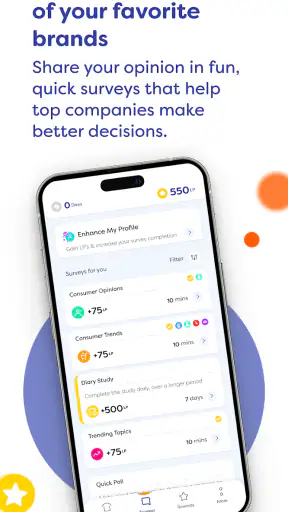
After opening the app, I found the basic idea easy to grasp: check for available questionnaires, answer them carefully, and build a balance toward a payout. There is no complicated game layer to learn and no need to manage a store, sell products, or complete a long setup before understanding the main activity. For someone who wants a low-effort survey app, that clarity is one of its strongest qualities.
The best time to use it is when I have a few uninterrupted minutes but not enough time for something more demanding. A queue at a pharmacy, a pause before a meeting, or a quiet part of a train journey can become a useful survey window. I would avoid starting one when I expect to be interrupted, because losing concentration halfway through a questionnaire makes the experience more frustrating and can waste the time I already invested.
LifePoints is rated for Everyone, which makes its presentation approachable for a broad audience. That does not mean every survey will feel equally relevant or comfortable. The questions can vary depending on the research available to a particular user, so I would read each prompt carefully and answer consistently rather than rushing simply to finish.
Speed expectations: quick to open, less predictable to complete
In normal use, the app feels designed for short sessions. I can open it, look at the current opportunities, and decide quickly whether I have enough time to participate. That is more useful than an app that hides its main task behind several layers of menus. The practical speed advantage is not necessarily that every survey is brief; it is that the next action is usually obvious.
The less predictable part is the survey flow itself. A questionnaire may appear suitable at first and then ask screening questions before deciding whether I match the intended audience. This is a natural part of market research, but it changes the value of a five-minute break. I would judge LifePoints by the pattern over several sessions, not by one unusually good or disappointing survey.
My advice is to treat the opening screen as an opportunity board, not a promise of guaranteed work. If something looks too long for the time available, I would leave it for later. I also prefer answering when I can give thoughtful responses, because inconsistent or careless answers are a poor strategy for any survey service and make the session feel slower.
Heavy-use moments and the cost of multitasking
The app is at its most demanding from a user’s perspective when several survey invitations arrive close together, when I am checking the balance repeatedly, or when I am trying to use it while doing something else. The actual task is not technically complex, but attention becomes the scarce resource. Switching between a survey and messages, video, or navigation makes it easier to miss a question or abandon the session.
I get better results by setting aside one small block of time instead of opening the app every few seconds. That approach also makes the reward feel more transparent: I know how much time I am giving rather than allowing the app to occupy every spare glance throughout the day. For people who dislike frequent notifications or interruptions, this habit is worth adopting from the beginning.
Another useful workflow is to keep a simple personal note of which survey types feel worthwhile. I would not record sensitive answers, but I might remember whether short consumer questionnaires fit my schedule better than longer opinion studies. Over time, that helps me decide faster and avoid accepting a task when I already know the format does not suit me.
There is also a psychological trade-off. Seeing a balance increase can make small rewards feel motivating, but it can also encourage unnecessary checking. I think the app works best when I use it deliberately, perhaps during planned downtime, rather than treating every idle second as an opportunity that must be monetized.
Reliability, progress, and recovering from interruptions
For a rewards app, reliability is about more than whether the interface opens. I also want the survey progress, balance, and redemption process to feel understandable. LifePoints presents a clear enough concept for a first-time user, but survey-based rewards always involve more uncertainty than a fixed digital purchase. Availability, eligibility, and completion all affect how smooth the experience feels.
If I am interrupted, I would not assume that every questionnaire can be resumed indefinitely. My safer habit is to start only when I can finish in one sitting and to avoid closing the app in the middle of an important section. That is not a complaint about a specific failure; it is sensible protection against losing context in any timed or multi-step questionnaire.
When something feels unusual, I would first check the balance and survey history rather than immediately repeating the same action. Reopening the app, allowing the current screen to settle, and avoiding multiple rapid taps are simple recovery steps. If a redemption needs attention, I would keep the confirmation details available and use the app’s own support route rather than relying on a third-party explanation.
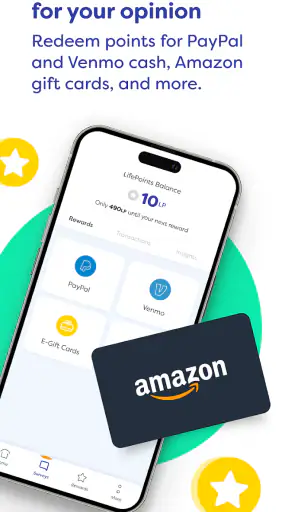
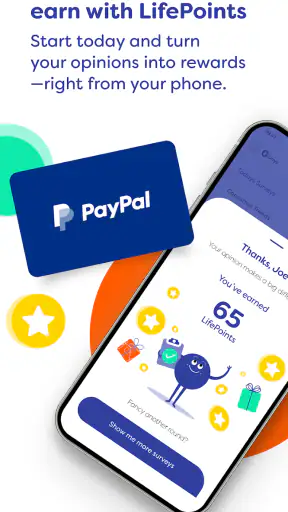
The payout choices are a meaningful strength for people who already use PayPal, Venmo, or gift cards. Having several familiar destinations is more convenient than receiving an obscure reward that is difficult to use. At the same time, the best option depends on what I actually spend. A gift card can be more useful than a payment account for one person, while another user may prefer keeping rewards in a familiar digital wallet.
I would also make sure my account details are accurate before trying to cash out. A rewards app is not the place for casual experimentation with mismatched information, because identity or payment problems can create avoidable friction. The important point is to think of redemption as the final stage of a process, not something to investigate only after accumulating a balance.
Device constraints and practical comfort
The current version is 3.1.31 and requires Android 8.0 or later. That gives the app a reasonably broad Android range, although anyone using an older phone should check compatibility before planning around it. On a supported device, I would expect the main limitation to be the age and condition of the phone rather than the complexity of the app itself.
Older or heavily crowded devices can make any survey session less pleasant. Limited storage, aggressive battery-saving settings, or a weak connection may interfere with loading pages or switching between screens. I would keep the app updated through the normal store process, leave enough free storage for ordinary app operation, and avoid starting a survey in a place where connectivity is unreliable.
Battery use matters differently here than it does with navigation, video, or games. LifePoints is not the sort of app I would expect to keep active for hours, so short, intentional sessions should be easier on a phone than continuous media use. The bigger resource cost is attention: if a questionnaire is long, the mental effort can outweigh the small reward even when the phone itself is handling the app comfortably.
Screen size can affect comfort too. On a compact phone, grids of answer choices or long question pages may require more scrolling and careful tapping. I would use a larger screen when available, especially for detailed questionnaires, but I would not choose a tablet solely for this purpose. The app’s value comes from convenience, and carrying extra hardware undermines that advantage.
Who gets the most from it
I think LifePoints suits people who enjoy giving opinions and are comfortable with variable opportunities. It is particularly reasonable for students, part-time workers, parents waiting during activities, or anyone who wants a small digital reward from downtime without paying an entry fee. The free price removes the financial risk of trying it, although your time still has value and should be treated that way.
It can also work for someone who prefers familiar redemption methods. PayPal, Venmo, and gift cards cover common spending habits, so the reward does not have to remain trapped inside a proprietary catalog. I would still compare the effort of each survey with the usefulness of the eventual reward, because convenience at cash-out does not automatically make every questionnaire worthwhile.
The app is less suitable for anyone seeking dependable earnings, instant compensation, or a fixed hourly return. Survey qualification can vary, and no amount of optimism changes that basic model. If I needed predictable money, I would look at paid freelance work, a scheduled shift, or a platform with clearly defined task rates instead.
I would also skip it if I dislike sharing opinions about products, media, shopping, or everyday habits. The entire value proposition depends on being willing to answer research questions. Someone who finds that process intrusive, repetitive, or boring will probably get more satisfaction from a cashback service, receipt scanner, or savings app that rewards purchases rather than answers.
How it compares with familiar alternatives
Compared with cashback apps, LifePoints asks for attention instead of requiring a purchase. That is useful when I have no shopping planned, but cashback can be better for someone who already buys eligible items and wants rewards attached to spending they would do anyway. Survey rewards are more accessible before a purchase, while cashback rewards may feel less like work once the transaction is complete.
Receipt-scanning apps offer another contrast. They usually fit naturally after grocery or retail trips, whereas LifePoints can be used without keeping receipts. The downside is that a receipt app ties the task to a concrete event, while survey availability may be less consistent. I would choose between them based on routine: frequent shoppers may prefer receipts, and people with more waiting time than shopping receipts may prefer questionnaires.
Compared with opinion panels that focus on longer studies, LifePoints feels more approachable for casual sessions. A specialist research panel may offer deeper assignments, but it can demand more commitment or patience. LifePoints makes more sense when I want a lightweight option and accept that the opportunity mix will change.
Finally, it differs from mobile games that award points for play. Games can be more entertaining, but they often ask for much more screen time before a reward feels meaningful. LifePoints is more direct: I am exchanging opinions for a possible payout, not pretending that entertainment is the main activity. For me, that honesty is refreshing, provided I keep expectations modest.
Small habits that improve the experience
I would begin by completing the profile carefully and keeping answers consistent over time. A rushed profile can lead to less relevant invitations, while contradictory responses make the survey experience harder to trust. I would also read the estimated effort before starting whenever that information is shown, then reserve longer questionnaires for a calm period.
My second habit would be to protect focus. Notifications can be useful for discovering opportunities, but I would not let them dictate my day. Checking at a couple of convenient moments is more sensible than constantly reopening the app. This also reduces the temptation to accept a survey simply because it is visible, even when the reward is not worth the interruption.
Third, I would choose the redemption route before reaching the threshold, based on how I plan to use the reward. That prevents a last-minute decision and makes it easier to notice whether the available option fits my needs. I would keep records of completed redemptions and account messages, not because I expect trouble, but because organized information makes any support conversation easier.
Privacy-minded users should make their own comfort decision before participating. Surveys exist to collect opinions for research, so I would read each question and avoid answering automatically. If a topic feels too personal, I would rather stop and reconsider than continue solely because I have already spent time on the questionnaire.
My performance verdict
From a performance standpoint, LifePoints makes sense as a lightweight companion rather than an app I would leave open all day. Its task is simple, its Android requirement is not unusually demanding, and its short-session design suits ordinary phones and brief breaks. The main variable is not raw speed; it is how quickly a relevant survey appears and how efficiently I can complete it without interruption.
Stability should be judged alongside the survey model. Even a smooth interface cannot guarantee a steady stream of suitable questionnaires or remove screening from market research. That is why I value the app more as a flexible extra than as a financial plan. The experience is strongest when I accept that some sessions will be productive and others will end quickly.
LifePoints: Rewards App is free, developed by Kantar Profiles, and currently listed as version 3.1.31 for Android devices running 8.0 or newer. Those details, along with its Everyone age rating and broad install base, make it easy to consider as a low-risk trial. I would install it if I wanted survey-based rewards and already liked the idea of PayPal, Venmo, or gift-card payouts.
My honest recommendation is to use it with a time limit and realistic expectations. Give it a fair test during genuine downtime, compare the effort with the rewards you can actually use, and stop if the questions feel like more work than they are worth. For casual opinion sharing, it is a sensible option; for predictable income, instant results, or completely passive rewards, a different category of app will serve you better.


